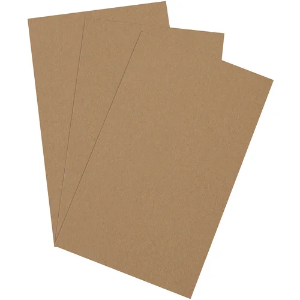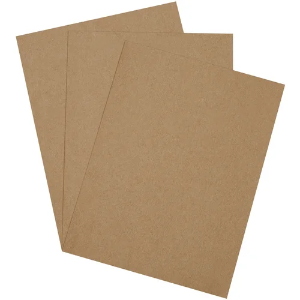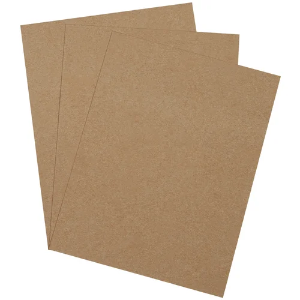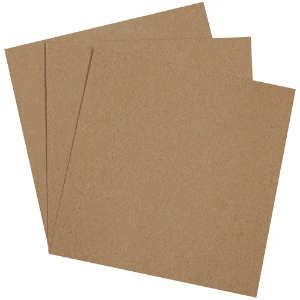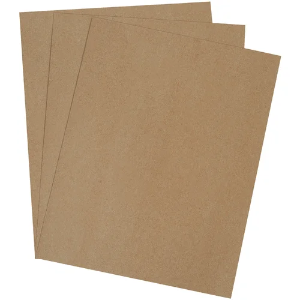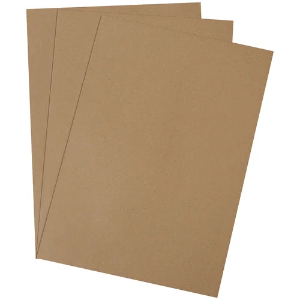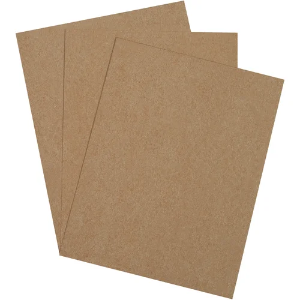
Chipboard Pads
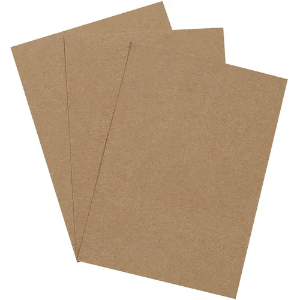
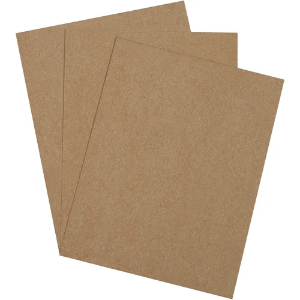
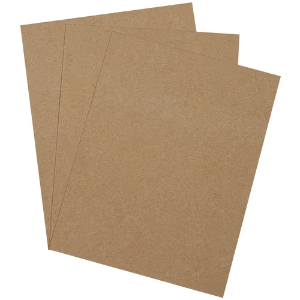
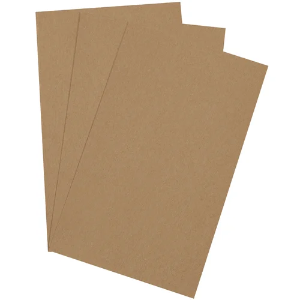
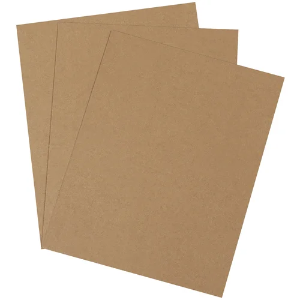
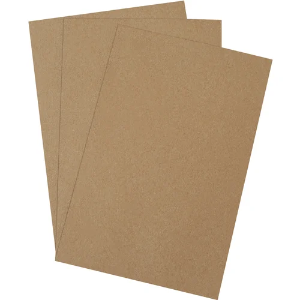
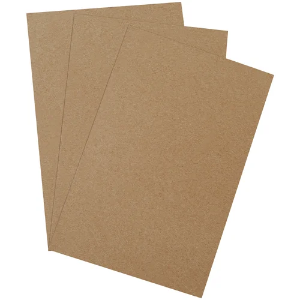
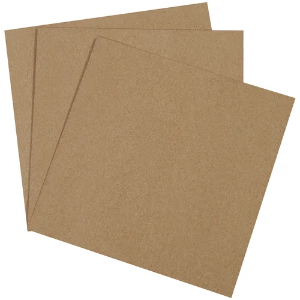
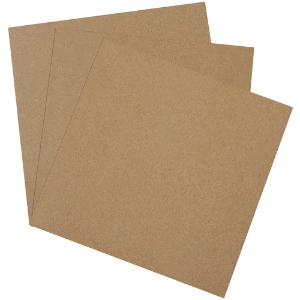
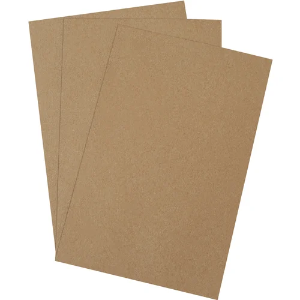
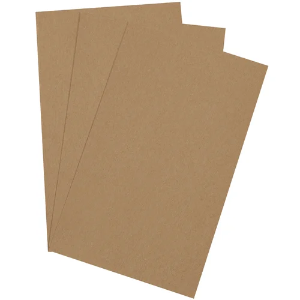
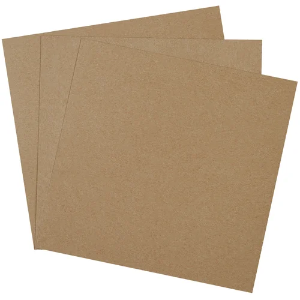
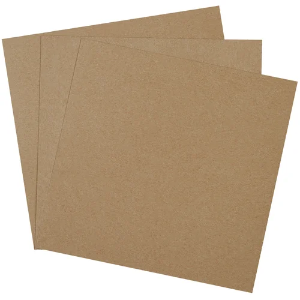
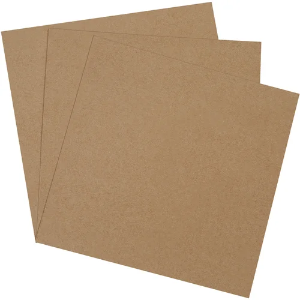
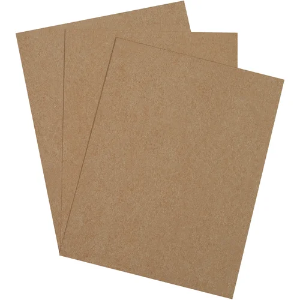
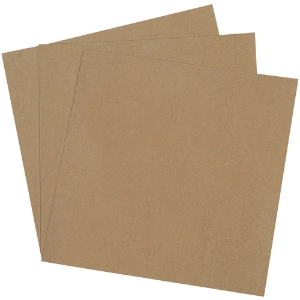
SupplyLand carries chipboard sheets and pads in bulk for packaging operations, print finishing, and shipping applications that need lightweight, rigid paperboard inserts. Chipboard, also called greyboard or paperboard, is a dense, uncorrugated sheet material used to stiffen envelopes and mailers, back retail packaging, reinforce folding cartons, and separate layers of product in boxes and flat-pack shipments. Our chipboard pads are available in standard sizes and multiple caliper thicknesses so you can match sheet rigidity to your application: from lightweight envelope stiffeners to heavy-duty carton backing.
Unlike corrugated cardboard, chipboard has no internal fluting. It is a solid sheet that resists bending and provides a flat, printable surface. This makes it the preferred choice for envelope stiffeners in photo mailers and document envelopes, backing boards in retail blister packs, and separators in apparel and textile packaging where a clean, flat surface is needed between folded layers. For applications requiring heavier-duty pallet protection and load-bearing strength, corrugated pads are the better choice. Pair chipboard with envelopes and mailers for complete stiffened-mail packaging solutions.
What is chipboard and what is it used for in packaging?
Chipboard is a solid, dense paperboard sheet made from recycled paper pulp. Unlike corrugated cardboard, it has no fluted inner layer. It is a uniform flat sheet that resists bending without adding significant weight or thickness. In packaging, chipboard is used as envelope stiffeners to keep photos, documents, and flat items from bending in transit, as backing boards in retail blister packs and hang-tag packaging, as separators between folded garments or printed materials in boxes, and as reinforcement pads in the base of cartons. It is also widely used in print finishing as a substrate for mounting, book covers, and rigid packaging inserts.
What is the difference between chipboard and corrugated cardboard?
Chipboard is a solid, flat paperboard sheet with no internal structure. It is stiff and smooth on both sides, making it ideal for surface-contact applications like stiffeners, backing boards, and layer separators. Corrugated cardboard has a fluted inner layer sandwiched between flat liners, which gives it significantly higher crush resistance, stacking strength, and cushioning compared to chipboard of the same weight. For load-bearing pallet protection and heavy shipping applications, corrugated pads outperform chipboard. For lightweight stiffening, flat surface separation, and applications where thickness must be minimized, chipboard is the right choice.
What chipboard thickness (caliper) should I use?
Chipboard caliper is measured in points (pt), where 1 point equals 0.001 inch. For envelope stiffeners and light document backing, 20–30 pt chipboard provides adequate rigidity without adding bulk to a standard envelope. For retail packaging inserts and carton backing, 40–60 pt is the standard range. For heavier-duty applications like mounting boards, cover boards, and carton bases expected to bear product weight, 70–100 pt chipboard is commonly specified. When in doubt, order a sample of two adjacent calipers and test with your actual product. The right choice depends on your specific packaging geometry and the weight it needs to support.
Can chipboard be used as a pallet layer pad?
Chipboard can function as a light-duty layer pad for separating layers of flat, lightweight products on a pallet, but it is not the recommended choice for most pallet-building applications. Chipboard lacks the crush resistance and stacking strength of corrugated, and it will compress and lose structural integrity under the weight of loaded cases. For true pallet layer protection, especially with stacked corrugated cartons, heavy components, or anything that will be moved by forklift, corrugated pads are the correct product. Reserve chipboard for in-box separation, surface protection of finished goods, and stiffener applications where compressive load is not a factor.
Where can I buy chipboard sheets in bulk?
SupplyLand sells chipboard sheets wholesale in bulk case quantities with per-unit pricing well below retail. Chipboard pads and envelope stiffeners are stocked in common standard sizes and available for fast delivery. For high-volume operations, ordering by the case or pallet reduces per-sheet cost and ensures your packaging line stays stocked. If you need a size or caliper not shown in our catalog, contact SupplyLand to discuss custom options.
SupplyLand carries chipboard sheets and pads in bulk for packaging operations, print finishing, and shipping applications that need lightweight, rigid paperboard inserts. Chipboard, also called greyboard or paperboard, is a dense, uncorrugated sheet material used to stiffen envelopes and mailers, back retail packaging, reinforce folding cartons, and separate layers of product in boxes and flat-pack shipments. Our chipboard pads are available in standard sizes and multiple caliper thicknesses so you can match sheet rigidity to your application: from lightweight envelope stiffeners to heavy-duty carton backing.
Unlike corrugated cardboard, chipboard has no internal fluting. It is a solid sheet that resists bending and provides a flat, printable surface. This makes it the preferred choice for envelope stiffeners in photo mailers and document envelopes, backing boards in retail blister packs, and separators in apparel and textile packaging where a clean, flat surface is needed between folded layers. For applications requiring heavier-duty pallet protection and load-bearing strength, corrugated pads are the better choice. Pair chipboard with envelopes and mailers for complete stiffened-mail packaging solutions.
What is chipboard and what is it used for in packaging?
Chipboard is a solid, dense paperboard sheet made from recycled paper pulp. Unlike corrugated cardboard, it has no fluted inner layer. It is a uniform flat sheet that resists bending without adding significant weight or thickness. In packaging, chipboard is used as envelope stiffeners to keep photos, documents, and flat items from bending in transit, as backing boards in retail blister packs and hang-tag packaging, as separators between folded garments or printed materials in boxes, and as reinforcement pads in the base of cartons. It is also widely used in print finishing as a substrate for mounting, book covers, and rigid packaging inserts.
What is the difference between chipboard and corrugated cardboard?
Chipboard is a solid, flat paperboard sheet with no internal structure. It is stiff and smooth on both sides, making it ideal for surface-contact applications like stiffeners, backing boards, and layer separators. Corrugated cardboard has a fluted inner layer sandwiched between flat liners, which gives it significantly higher crush resistance, stacking strength, and cushioning compared to chipboard of the same weight. For load-bearing pallet protection and heavy shipping applications, corrugated pads outperform chipboard. For lightweight stiffening, flat surface separation, and applications where thickness must be minimized, chipboard is the right choice.
What chipboard thickness (caliper) should I use?
Chipboard caliper is measured in points (pt), where 1 point equals 0.001 inch. For envelope stiffeners and light document backing, 20–30 pt chipboard provides adequate rigidity without adding bulk to a standard envelope. For retail packaging inserts and carton backing, 40–60 pt is the standard range. For heavier-duty applications like mounting boards, cover boards, and carton bases expected to bear product weight, 70–100 pt chipboard is commonly specified. When in doubt, order a sample of two adjacent calipers and test with your actual product. The right choice depends on your specific packaging geometry and the weight it needs to support.
Can chipboard be used as a pallet layer pad?
Chipboard can function as a light-duty layer pad for separating layers of flat, lightweight products on a pallet, but it is not the recommended choice for most pallet-building applications. Chipboard lacks the crush resistance and stacking strength of corrugated, and it will compress and lose structural integrity under the weight of loaded cases. For true pallet layer protection, especially with stacked corrugated cartons, heavy components, or anything that will be moved by forklift, corrugated pads are the correct product. Reserve chipboard for in-box separation, surface protection of finished goods, and stiffener applications where compressive load is not a factor.
Where can I buy chipboard sheets in bulk?
SupplyLand sells chipboard sheets wholesale in bulk case quantities with per-unit pricing well below retail. Chipboard pads and envelope stiffeners are stocked in common standard sizes and available for fast delivery. For high-volume operations, ordering by the case or pallet reduces per-sheet cost and ensures your packaging line stays stocked. If you need a size or caliper not shown in our catalog, contact SupplyLand to discuss custom options.
Active Filters