Hearing Protection
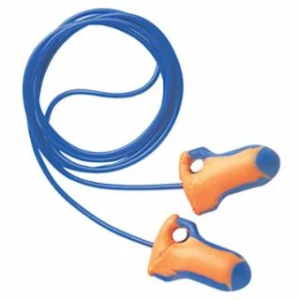
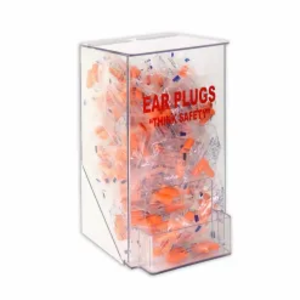
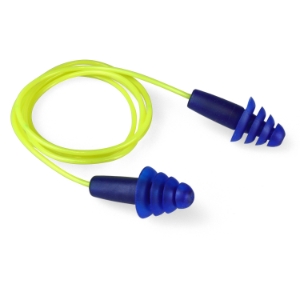
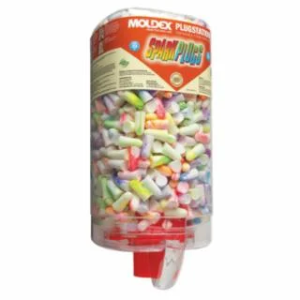
SupplyLand carries hearing protection earplugs and earmuffs in bulk for manufacturing facilities, construction sites, warehouses, and any work environment where noise exposure exceeds OSHA and ANSI permissible limits. Our disposable earplugs are the workhorse of any hearing conservation program, single-use foam plugs that workers can grab from a wall dispenser, roll, and insert in seconds. NRR ratings range from 28 to 33 dB, covering the noise levels found in most industrial environments. Reusable earplugs feature triple-flange or pre-molded silicone designs that workers can wash and reuse across shifts, reducing waste and per-use cost in long-term programs. Ear plug dispensers mount at facility entrances and shop floors so workers always have hearing protection within reach.
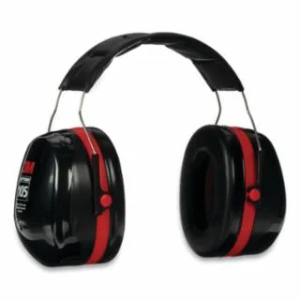
For environments where earplugs are not practical, or where a higher level of hearing protection is required, earmuffs provide consistent attenuation without insertion technique variability. Over-ear earmuffs are easy to put on and take off for workers moving between high-noise and quieter zones, and they are visually verifiable for safety supervisors checking PPE compliance. For food processing, pharmaceutical, and other regulated environments, metal detectable earplugs include a metal core that triggers HACCP and quality-control metal detection systems if a plug ends up in product. Refillable dispensers reduce ongoing supply costs by accepting bulk refill bags rather than individually packaged plugs. All hearing protection meets ANSI S3.19 attenuation testing and OSHA hearing conservation standards.
What NRR rating do I need for my work environment?
NRR (Noise Reduction Rating) is the dB attenuation a hearing protection device provides under ideal lab conditions. Real-world attenuation is typically lower, OSHA recommends derating NRR by 50% for foam earplugs and 25% for earmuffs when calculating actual workplace exposure. Match NRR to your measured workplace noise level: for 85–95 dBA environments, NRR 25–28 disposable earplugs are typically sufficient. For 95–105 dBA, choose NRR 30+ plugs or earmuffs. For 105+ dBA environments, use dual hearing protection (plugs + muffs) for combined attenuation. Always conduct a noise survey of your work area before specifying hearing protection, and document NRR selection as part of your hearing conservation program.
What is the difference between disposable earplugs and reusable earplugs?
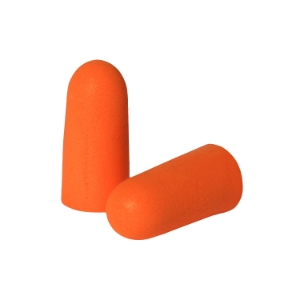
Disposable earplugs are single-use foam plugs that the worker rolls down, inserts, and lets expand to seal the ear canal. They offer high NRR ratings (28–33 dB), are inexpensive per unit, and don't require cleaning, the standard choice for high-volume programs and facilities where worker turnover or visitor traffic makes individual plug assignment impractical. Reusable earplugs feature pre-molded silicone or triple-flange designs that workers wash with soap and water between uses. They have a lower per-pair cost over time, reduce waste, and are easier to insert correctly for workers who struggle with the roll-and-insert technique on foam plugs. The trade-off is that workers need to maintain and store them between shifts. For most facilities, a hybrid program, reusable for permanent staff, disposable for visitors, works best.
When do I need metal detectable earplugs?
Metal detectable earplugs include a metal core or metal cord that triggers metal detection equipment used in food processing, pharmaceutical manufacturing, and other HACCP-regulated environments. If a worker accidentally drops a plug into a product line or production batch, the metal detector flags the contaminated batch before it reaches consumers, supporting both food safety regulations and product quality control. They are typically required PPE in food and beverage production, dairy, meat processing, supplement manufacturing, and any facility with HACCP, SQF, BRC, or FSMA compliance requirements. For non-regulated environments, standard disposable earplugs without the metal core are usually the more economical choice.
Should I provide earplugs or earmuffs for my workers?
Earplugs and earmuffs both provide effective hearing protection when fit and used correctly, the right choice depends on your environment, workforce, and task profile. Earplugs are better when workers wear other head PPE (helmets, face shields), in hot environments where over-ear muffs become uncomfortable, and for tasks that require fitting headwear close to the head. Earmuffs are better for workers who move in and out of high-noise zones repeatedly (easier to put on and take off than insertion plugs), for workers who can't fit plugs correctly, and where supervisors need to visually verify PPE compliance from a distance. Many facilities offer both and let workers choose what fits their job, just make sure the chosen option meets your noise survey NRR requirement.
Can I buy hearing protection in bulk for a safety program?
Yes, SupplyLand sells hearing protection wholesale in bulk case quantities sized for facility hearing conservation programs. Disposable earplugs are available in 100-pair boxes and 200-pair refill bags for high-volume programs. Earmuffs ship by the case for facility supply rooms. Ear plug dispensers and refillable dispensers keep plugs accessible at facility entrances, shop floors, and high-noise zones, mount them where workers enter the noise area and refill from bulk packs to keep ongoing costs low. Buying in bulk reduces per-pair cost significantly versus retail packaging.
Disposable Earplugs, Reusable Earplugs & Dispensers
Earmuffs & Specialty Hearing Protection