Corrugated Cardboard Boxes for Shipping, Storage & Packaging
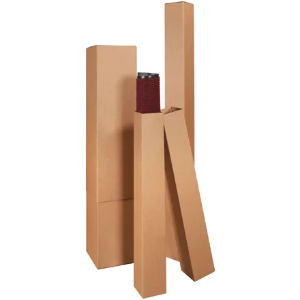
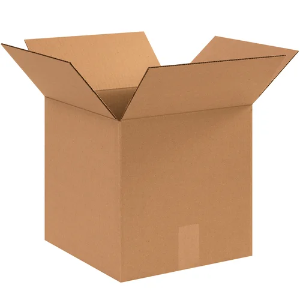
SupplyLand stocks corrugated shipping boxes in hundreds of sizes, from compact carton boxes for e-commerce orders to heavy duty boxes built for palletized freight. Every corrugated cardboard box in our catalog is made from strong, recyclable fluted board designed to protect your products in transit. Need kraft boxes for everyday shipping? White boxes for a cleaner retail presentation? Long boxes for posters, rods, or artwork? We carry them all at bulk shipping box pricing with fast delivery.
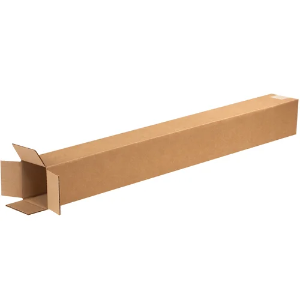
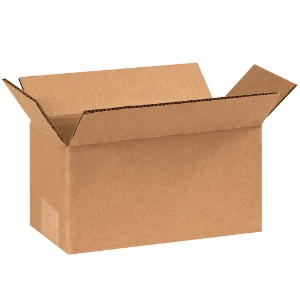
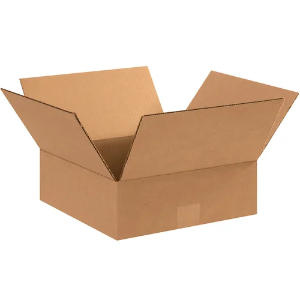
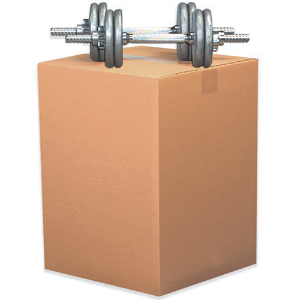
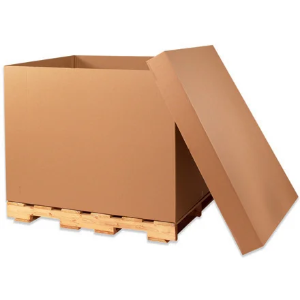
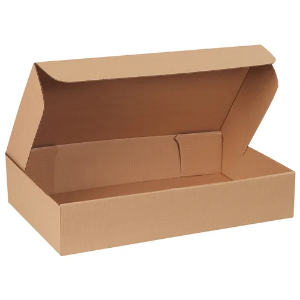
Our cardboard shipping boxes range from single-wall 32 ECT for lightweight items to double-wall and heavy duty 48 ECT options for loads over 40 lbs. Browse cube boxes for uniform items, flat boxes for documents and frames, tall boxes for lamps and vases, or multi-depth boxes that score down to fit multiple product heights. Pair any box with bubble cushioning, packing tape, and packing paper for a complete packaging solution. For temperature-sensitive shipments, check out our insulated shipping boxes.
What is the difference between single-wall and double-wall corrugated boxes?
Single-wall corrugated boxes have one layer of fluted board sandwiched between two flat liners. They are rated at 32 ECT or 200# burst test and work well for items under 20 lbs. Double-wall boxes add a second fluted layer for extra stacking strength and puncture resistance, typically rated at 48 ECT or higher. Choose double-wall or heavy duty boxes for anything over 40 lbs, for palletized loads, or when contents are dense and sharp-edged. For most standard e-commerce and warehouse shipping, single-wall kraft boxes offer the best balance of protection and cost.
What size corrugated box do I need for my product?
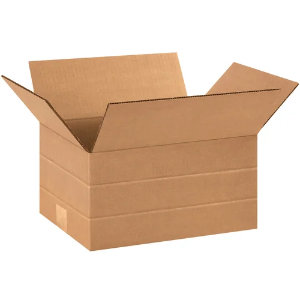
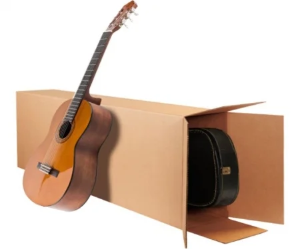
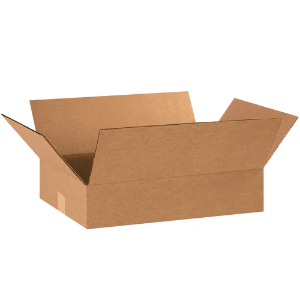
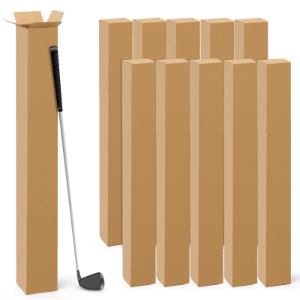
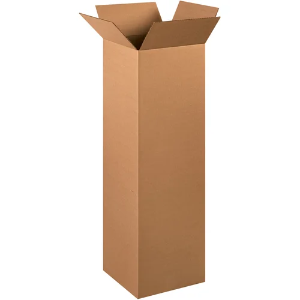
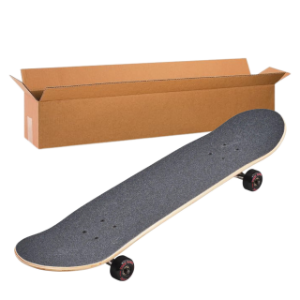
Measure your product's length, width, and height, then add about 2 inches on each side for cushioning material. For uniform, roughly square products, cube boxes minimize wasted space. Flat boxes work best for books, frames, and thin items. Tall boxes suit lamps, vases, and upright products. Long boxes handle posters, fishing rods, and similar items. If you ship products of varying heights, multi-depth boxes have pre-scored lines that let you fold down to the right size and reduce dimensional weight charges.
When should I use white corrugated boxes instead of kraft?
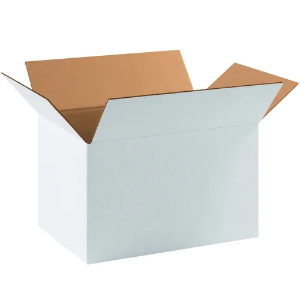
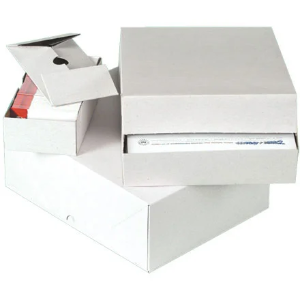
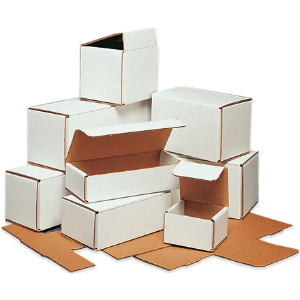
White boxes are the better choice when appearance matters at the point of delivery. Subscription boxes, direct-to-consumer brands, and retail gift shipments all benefit from the cleaner look and print-ready surface of a white corrugated box. Kraft boxes are more economical and perfectly functional for B2B shipping, warehouse transfers, and any application where branding on the outer box is not a priority. Both use the same corrugated flute structure, so protection and strength are equivalent at the same ECT rating.
What is the best way to pack fragile items in a corrugated box?
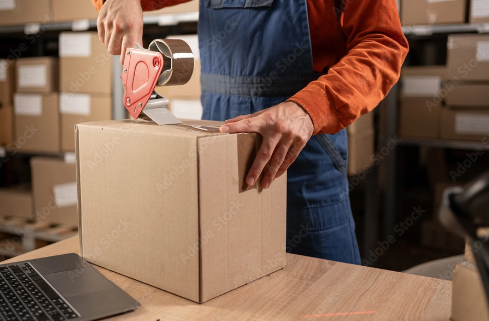
Start with a box that leaves at least 2 inches of clearance around the item on all sides. Line the bottom with bubble cushioning or foam cushioning, center the item, and fill all remaining voids with packing paper or packing peanuts. The goal is zero movement when you shake the sealed box. Seal all seams with packing tape using the H-taping method (center seam plus both edges) for maximum hold. For high-value or extremely fragile products, double-boxing with cushioning between the inner and outer box is the safest approach.
How many boxes should I order in bulk?
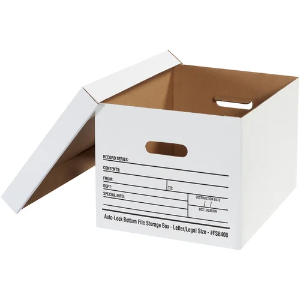
Look at your average weekly or monthly shipment volume and multiply by your top 2 to 3 box sizes. Most businesses see meaningful per-unit savings starting at 25 to 50 bundle quantities, with steeper discounts at full-pallet orders. If your product mix varies in size, stocking multi-depth boxes in one or two base dimensions can reduce the total number of SKUs you need to keep on hand. Store flat on pallets in a dry area to preserve stacking strength, and rotate older stock first.
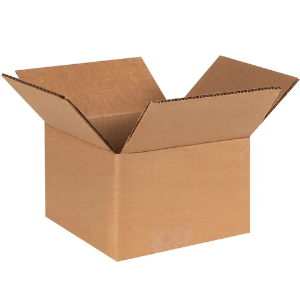
Kraft, Cube & Corrugated Mailing Boxes
Specialty Shipping Boxes & Bulk Cargo Containers