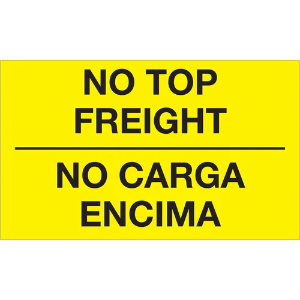
Shipping and Handling Labels
Shipping and handling labels tell handlers how a package should be treated: fragile shipping labels flag breakable contents, arrow shipping labels show which way a box should stay upright, and bilingual shipping labels carry instructions in two languages. For cross-border freight, international safe handling labels use standardized icons, and international fragile shipping labels mark breakable goods for foreign carriers.
Shipping and handling labels communicate how a package should be treated from the dock to the destination. Choose by instruction type, from fragile warnings and orientation arrows to bilingual and international icon labels.
• Fragile and handling instructions: Warning labels flag breakable contents and general care requirements for carriers and receivers.
• Orientation and restrictions: Arrow labels mark which way is up, and Do Not labels call out restrictions such as do-not-stack or do-not-freeze.
• Bilingual and international options: Two-language labels and international safe handling icons communicate instructions across borders and languages.
• Printer compatibility: Adhesive label sheets and rolls are compatible with laser, inkjet, and thermal printers and adhere to boxes, envelopes, and pallets.
Q: What is the difference between handling labels and fragile labels?
A: Handling labels cover general instructions, orientation, stacking, and similar guidance, while fragile labels specifically flag that contents need careful, gentle handling. Many shipments use both together.
Q: When do I need bilingual or international safe handling labels?
A: For shipments crossing into non-English-speaking regions, where a bilingual label or the standardized international safe handling icon set communicates instructions without a language barrier.
Shop Shipping Labels by Purpose



Supporting Categories